HH8812A

For millions of adult children living in a different city—or even a different country—from their aging parents, the concern never fully goes away. Is Mom okay after her shower? Has Dad returned safely from his morning walk?
In the U.S. and Europe, more seniors are choosing to age in place and live independently for as long as possible. But with independence comes risk. Falls, wandering incidents, and delayed emergency response remain some of the biggest concerns for families with elderly loved ones.
According to the CDC, one out of four Americans aged 65 and older experiences a fall every year, making falls one of the leading causes of injury among seniors. For older adults with mild cognitive decline or Alzheimer’s-related conditions, getting lost during a walk can also become a serious safety issue.
The good news is that modern assistive devices for the elderly are becoming smarter, more practical, and less intrusive. Today’s technology can help seniors maintain their independence while giving families much-needed peace of mind. This guide explores the most common risks facing older adults and the practical tools that can help reduce them.
A simple fall can quickly change a senior’s quality of life. Beyond physical injuries, many older adults lose confidence after falling and begin avoiding outdoor activities altogether. Reduced mobility often leads to less exercise, increased isolation, and a greater dependence on family members or caregivers.
This is why elderly fall prevention devices are becoming increasingly important for families trying to support aging parents at home.
For seniors experiencing mild memory loss or cognitive decline, even a short walk around the neighborhood can become risky. Families may worry about parents getting confused, forgetting directions, or being unable to contact someone during an emergency.
Traditional solutions like ID bracelets offer limited protection because they rely on another person noticing the issue. Modern mobility aids for seniors now include GPS tracking and emergency communication features that provide more immediate support.
Sometimes the warning signs appear gradually. Families often notice small behavioral changes long before a major accident happens.
Your parent may benefit from additional support if they:
·Have experienced a fall or balance issue within the past year
·Walk more slowly or avoid going outside alone
·Frequently call family members for assistance
·Show signs of forgetfulness during daily routines
·Feel anxious about walking outdoors
·Live alone without immediate help nearby
For many families, these signs are the first indication that assistive devices for the elderly could improve both safety and confidence.
The table below compares traditional safety tools with newer technology-based solutions designed for independent seniors.
| Safety Need | Traditional Solution (Limits) | Tech-Enhanced Option (Benefits) | Why It Matters |
| Fall detection | Medical alert button that must be pressed manually | Automatic fall alerts without requiring user action | Faster emergency response if the senior cannot react |
| Wandering prevention | Basic ID bracelet | Real-time GPS tracking connected to a mobile app | Helps families locate seniors quickly |
| Nighttime mobility | Ordinary walking stick | LED lighting for nighttime visibility | Reduces tripping risks during evening movement |
| Emergency response | Waiting for someone to notice a problem | One-click SOS emergency assistance | Immediate communication with caregivers |
| Mobility support | Standard cane | Smart mobility device with multiple safety features | Combines support, monitoring, and communication |
As you can see, modern assistive devices for the elderly now combine several safety functions into a single product. For example, a gps walking cane can provide mobility support, fall detection, emergency alerts, and real-time location tracking in one easy-to-use device.
Newer generations of smart mobility aids are designed to help seniors stay active without making them feel overly monitored or dependent.
One example is the HH8816 smart walking cane, which combines traditional walking support with modern safety technology.
A gps walking cane allows family members or caregivers to view the senior’s real-time location through a connected mobile app. This feature is especially valuable for seniors with mild dementia or memory-related conditions who may accidentally wander farther than expected.
Unlike traditional alert buttons that require manual activation, smart cane technology can automatically detect falls and notify emergency contacts immediately. This can significantly reduce response time during emergencies.
The anti-slip base design improves grip on wet or uneven surfaces, helping reduce the likelihood of slips and balance-related accidents.
Many seniors struggle with small buttons due to arthritis or limited hand strength. Voice control and one-click SOS features simplify emergency communication and make the device easier to use daily.
Built-in LED lighting can illuminate pathways during evening walks or nighttime bathroom trips, reducing visibility-related fall risks. Together, these functions allow a smart cane for seniors to replace several separate products, including a traditional cane, GPS tracker, flashlight, and medical alert device.
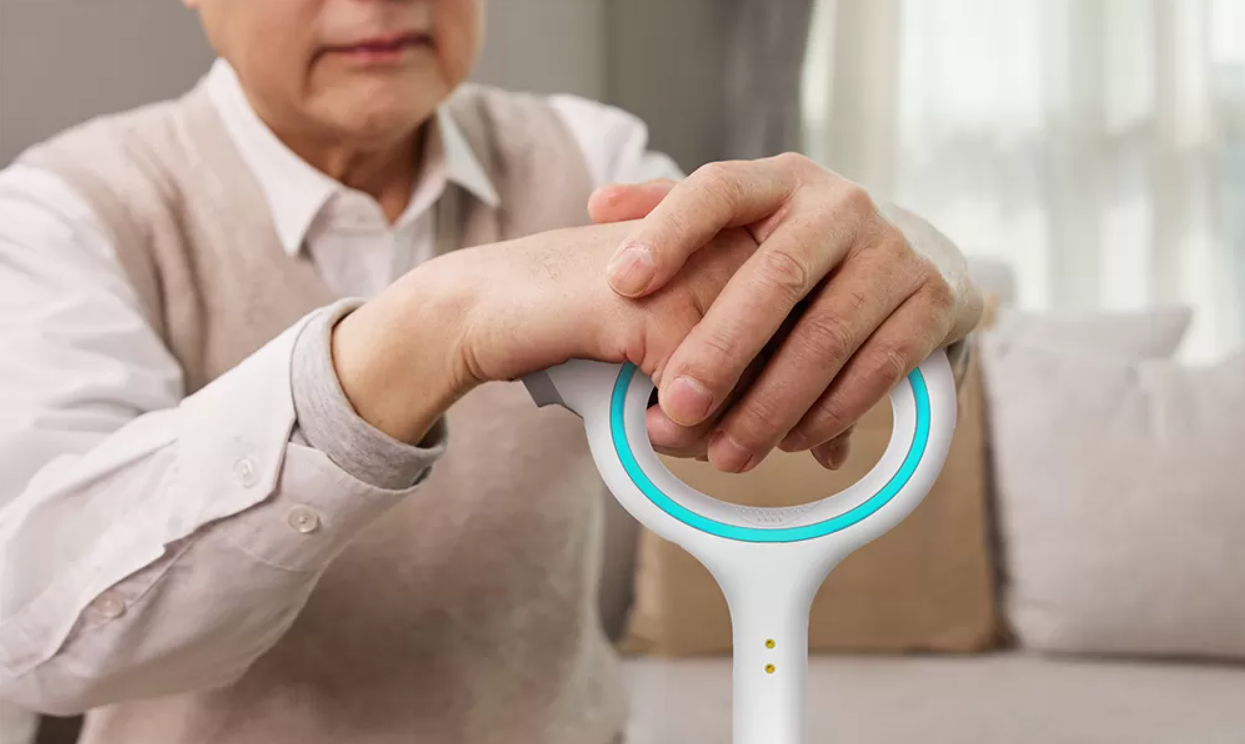
One major challenge with elderly safety technology is adoption. Many seniors refuse to wear panic buttons or monitoring devices because they feel medical, invasive, or uncomfortable.
A walking cane, however, is already familiar. It feels natural rather than clinical.
This is one reason why a smart walking cane can be a practical low-intrusion solution. Seniors are often more willing to use a mobility aid that quietly adds safety features without changing their daily routine or making them feel dependent.
For assisted living facilities, rehabilitation centers, and DME suppliers, this higher adoption rate can also reduce product return rates and improve long-term customer satisfaction.
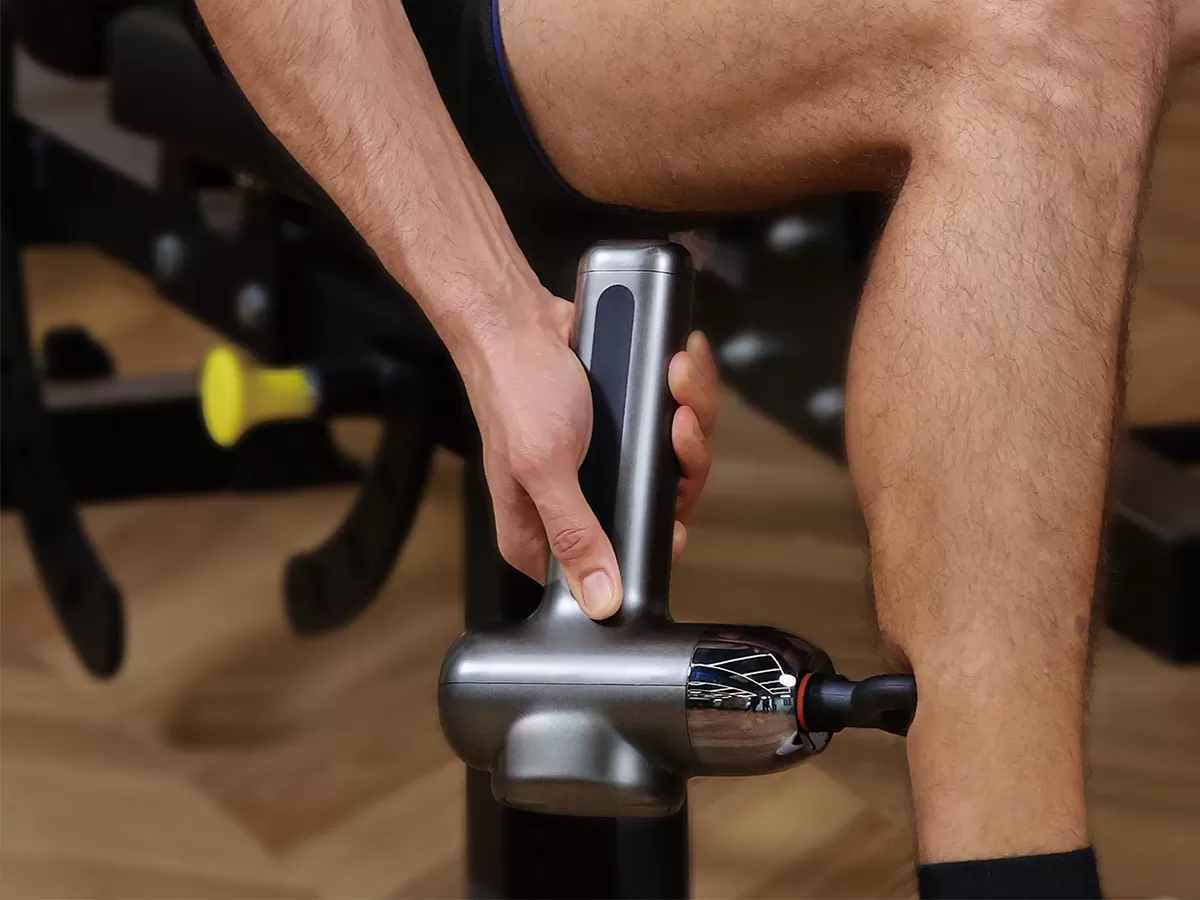
Businesses serving active older adults may also combine mobility aids with wellness-focused products, such as recovery and massage tools, to create a more complete active-aging product lineup.
Not every senior requires advanced safety technology. However, a gps walking cane may be especially helpful if your parent or client:
·Lives alone
·Has experienced previous falls
·Shows signs of memory decline
·Walks outdoors independently
·Has family members living far away
·Resists cameras or home monitoring systems
For many families, starting with a familiar mobility aid that includes modern safety features is one of the easiest and least stressful ways to improve elderly safety at home.
Aging parents should not have to choose between independence and safety. Modern assistive devices for the elderly, especially a gps walking cane with fall detection and emergency alerts, help reduce risks without disrupting daily life. For families living far away, these tools provide both practical protection and greater peace of mind.
If you are unsure whether your parent needs additional mobility support, observe their walking habits for one week. Do they hesitate at curbs or doorways? Have they stopped taking walks they once enjoyed? Do they seem nervous about going outside alone?
Small behavioral changes are often early warning signs. In many cases, HoHiTEC smart walking cane with GPS tracking and fall detection can help seniors stay confident, active, and independent for longer.
PREV