HH8821

Neck and shoulder tension is increasingly common among office workers, frequent smartphone users, drivers, fitness enthusiasts, and anyone who spends long periods in a fixed posture. For everyday muscular tightness and relaxation, an electric cupping massager offers a convenient alternative to traditional cupping by combining controllable suction with functions such as heat and vibration in a compact home-use device.
Its main advantage is not simply stronger suction. A well-designed electric cupping device gives users better control over intensity, treatment time, and comfort. This makes it easier to incorporate into an everyday wellness routine without the preparation normally associated with traditional cupping. However, correct placement and moderate intensity remain essential, particularly around the neck and shoulder area.
The neck and shoulder region is particularly sensitive to prolonged static posture. When someone works at a computer for several hours, looks down repeatedly at a phone, drives for extended periods, or performs repetitive upper-body movements, the muscles around the upper back and shoulders may remain under low-level tension for long periods.
This does not necessarily mean the muscles require aggressive treatment. In many everyday situations, users are primarily looking for a comfortable way to relax after work or physical activity. Regular movement, better workstation ergonomics, adequate rest, and appropriate exercise remain important, while personal wellness devices can provide an additional relaxation option.
This is where an electric cupping massager becomes particularly practical. Instead of relying on manual pumping or fire-based traditional methods, an electric model can generate controlled negative pressure automatically, making the experience more consistent and easier for home users to manage.
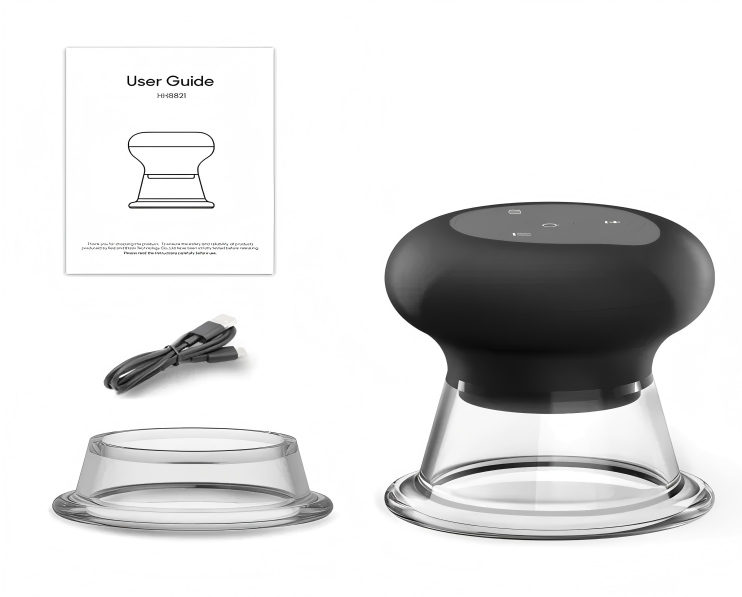
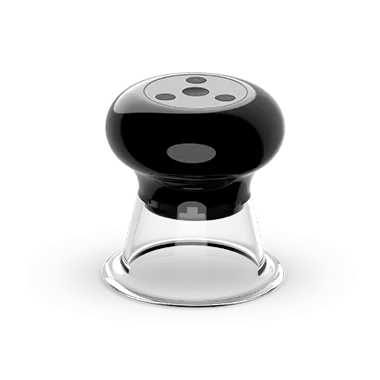
An electric cupping massager uses a small internal pump to create negative pressure between the cup and the skin. This suction gently lifts the skin and superficial tissue into the cup. Depending on the product design, the device may then combine this suction with controlled warmth or vibration.
The user experience therefore depends on more than suction strength. Pump stability, adjustment range, cup geometry, heating control, vibration pattern, controls, and overall ergonomics all influence whether the product feels comfortable in regular use.
| Feature | Primary Function | Why It Matters for Home Users |
|---|---|---|
| Adjustable Suction | Changes negative-pressure intensity | Allows users to start gently and adjust according to comfort |
| Heating Function | Provides controlled warmth | Adds a relaxing thermal sensation during use |
| Vibration | Adds rhythmic stimulation | Creates a more varied massage experience |
| Intensity Controls | Adjusts operating settings | Makes the device suitable for different user preferences |
| Rechargeable Design | Supports cordless operation | Improves portability for home, office, or travel use |
For routine wellness use, electric cupping can provide a localized suction and warming experience that some users find relaxing after prolonged sitting, repetitive activity, or exercise. Its advantage over a conventional manual cup is the ability to reproduce a selected operating level more consistently.
However, an electric cupping device should not be positioned as a treatment for every form of neck or shoulder pain. Persistent pain, significant weakness, numbness, tingling, recent trauma, severe swelling, or symptoms extending into the arm require appropriate professional assessment rather than increasingly intense home massage.
For ordinary relaxation, the objective should be comfort rather than creating the strongest possible suction or the darkest possible marks. Visible cupping marks are influenced by suction intensity, duration, skin characteristics, and application area; they should not be treated as a measurement of effectiveness.
Placement is especially important around the neck. The device is better suited to broad muscular areas around the upper shoulders and upper back than to sensitive structures at the front or side of the neck.
Users should avoid placing strong suction directly over the throat, cervical vertebrae, prominent bones, damaged skin, active bruising, irritated areas, or other sensitive structures. The cup also needs enough relatively flat surface contact to create stable suction.
For this reason, product design matters. A device intended for home use should have a cup shape and control layout that make positioning straightforward rather than forcing the user to maintain an awkward posture while adjusting settings.
The most important difference is repeatability. Traditional techniques depend considerably on the method and experience of the person applying the cup. Electric products automate part of this process, allowing users to choose from preset or adjustable operating levels.
| Comparison | Traditional Cupping | Electric Cupping |
|---|---|---|
| Suction Generation | Manual pump or traditional technique | Electric pump |
| Intensity Adjustment | Highly dependent on technique | Electronic adjustment |
| Heat Function | Depends on method | Can be integrated into the device |
| Vibration | Generally unavailable | Available on selected models |
| Home Convenience | May require assistance | Designed for easier personal operation |
Modern product development is therefore moving beyond simple suction. An electric cupping massager therapy fucntional design can combine negative pressure, heating, and vibration in one unit, giving users several ways to adjust the overall relaxation experience.
The first feature to evaluate is not maximum suction, but the usable adjustment range. A device with several practical intensity levels is generally more versatile than one designed mainly to advertise very strong negative pressure.
Heating control is another important consideration. The purpose of integrated heat is to create a comfortable warming sensation, so predictable temperature management is more valuable than simply reaching a high temperature.
Buyers should also examine the cup structure. The contact surface needs to create a reliable seal while remaining suitable for the intended body areas. If a product is difficult to position, users are less likely to use it consistently regardless of how many electronic functions it provides.
Battery performance, charging method, operating noise, button placement, display visibility, and cleaning convenience also influence real-world usability. For retailers and distributors evaluating an electric cupping machine, these details can be more important to customer satisfaction than adding another rarely used operating mode.
No. Stronger suction should not automatically be interpreted as better performance.
Users vary considerably in skin sensitivity and pressure tolerance. A setting that feels comfortable to one person may be excessive for another. Starting at a lower intensity also gives the user time to understand how the skin responds before increasing suction.
This is particularly important when heat and vibration are operating at the same time. Multiple sensations can make the overall experience feel more intense even when suction itself has not changed significantly.
From a product-design perspective, the ability to make gradual adjustments is therefore more useful than simply maximizing pump strength. For brands and distributors, clear instructions on intensity selection can also reduce misuse and improve long-term customer satisfaction.
Neither device is automatically better because the sensations and application methods are fundamentally different.
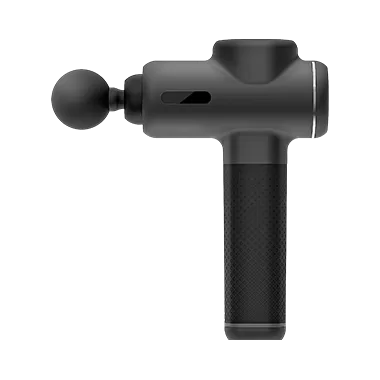
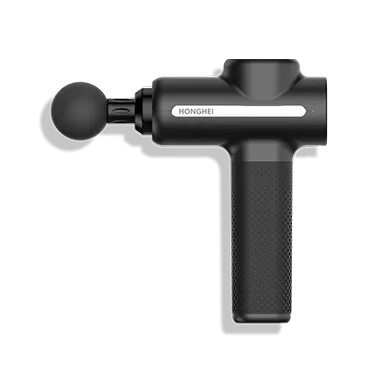
A massage gun uses rapid mechanical percussion and can be moved continuously across a muscle. This makes it useful when the user wants to target several muscular areas during one session.
Electric cupping creates suction and normally remains positioned on a selected area for a period of time. Users who prefer a stationary suction and warming sensation may therefore find cupping more relaxing than repeated percussion.
The choice should depend on the intended experience. Someone wanting targeted percussion after a workout may prefer a massage gun, while someone looking for a suction-based relaxation routine at home may prefer electric cupping. These product categories can therefore complement rather than directly replace one another.
There is no universal frequency that suits every user. Session frequency should depend on the manufacturer's instructions, suction intensity, session duration, application area, and individual skin response.
If an area remains visibly marked, sensitive, or irritated after a previous session, repeatedly applying strong suction to exactly the same location is unnecessary. Allow the skin to recover and select a different appropriate area if needed.
Regular users should also address the reasons shoulder tension repeatedly develops. Better workstation positioning, regular movement breaks, strength and mobility exercises, and adequate rest provide a more sustainable approach than relying on any single wellness device every time discomfort appears.
It can provide a localized suction and warming experience that some users find relaxing for everyday muscular tightness. It should not be considered a treatment for persistent or unexplained shoulder pain.
Use caution around the neck. Broad muscular areas around the upper shoulders are generally more appropriate than the throat, front or side of the neck, cervical spine, or other sensitive structures. Always follow the product's specific instructions.
Follow the operating time recommended for the specific device. Longer sessions and stronger suction do not necessarily produce a better relaxation experience.
Temporary marks can occur because suction affects the skin and superficial tissues. Their appearance varies according to pressure, duration, application area, and individual skin response.
They provide different experiences. Electric cupping uses stationary negative pressure, while a massage gun uses moving percussion. The better choice depends on the user's preferred sensation, target area, and intended wellness routine.
Electric cupping technology makes a traditional wellness concept more convenient for modern home users by introducing adjustable suction, controlled heat, vibration, and portable electronic operation. For everyday shoulder tension associated with work, exercise, or prolonged posture, the most useful device is not necessarily the one with the strongest suction, but the one that provides comfortable adjustment, sensible ergonomics, and predictable control.
Used conservatively and combined with regular movement, good posture, appropriate exercise, and adequate recovery, electric cupping can provide a practical addition to an everyday relaxation routine.
NEXT