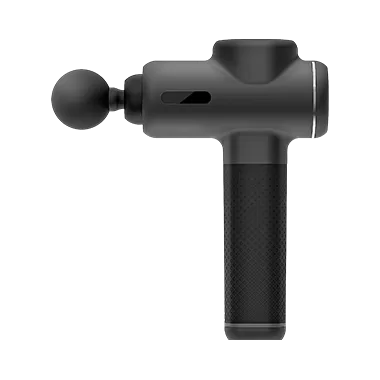
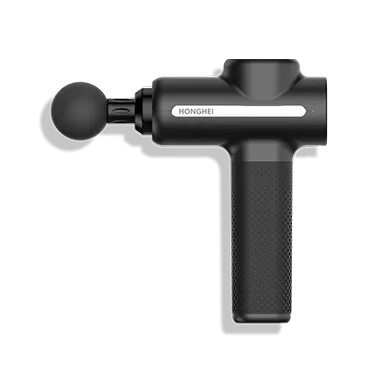
HH8503

Compare massage guns and foam rollers to understand their differences, benefits, and ideal uses. Learn which recovery tool is right for athletes, fitness users, and everyday muscle relaxation.
A massage gun is usually the better choice for targeted muscle relaxation, portability, and quick recovery sessions, while a foam roller is more suitable for broad muscle coverage and mobility exercises. The right option depends on your recovery goals, training intensity, available space, and how precisely you want to control pressure.
For athletes, home fitness users, and people experiencing daily muscle stiffness, these two recovery tools are not direct competitors. They provide different approaches to soft tissue care. A massage gun uses powered percussion to deliver repeated impacts, while a foam roller relies on body weight and rolling pressure to stimulate larger muscle areas.
The biggest difference between a massage gun and a foam roller is the way pressure is applied. A foam roller requires the user to move their body across a cylindrical surface, allowing gravity and body weight to create compression. This makes it effective for large muscle groups such as the quadriceps, hamstrings, calves, and glutes.
A massage gun provides a more controlled experience. Users can select different speed levels, massage heads, and pressure levels while directly targeting specific areas. This makes it especially useful when only one muscle group feels tight or fatigued after exercise.
| Comparison | Massage Gun | Foam Roller |
|---|---|---|
| Working Method | Powered percussion stimulation | Body-weight compression and rolling |
| Target Area | Specific muscles and smaller areas | Large muscle groups |
| Pressure Control | Speed settings and manual pressure adjustment | Controlled by body position |
| Convenience | Portable and easy to use anywhere | Requires more space and positioning |
| Best Application | Targeted muscle relaxation and recovery | Mobility improvement and full-body rolling |
A massage gun is ideal when you need precise muscle targeting. For example, runners may experience tight calves after long-distance training, while strength athletes may focus on specific areas such as shoulders, quadriceps, or glutes after intense workouts.
Compared with a foam roller, a massage gun allows users to adjust intensity more easily. This is especially valuable for beginners who may find aggressive foam rolling uncomfortable or difficult to control.
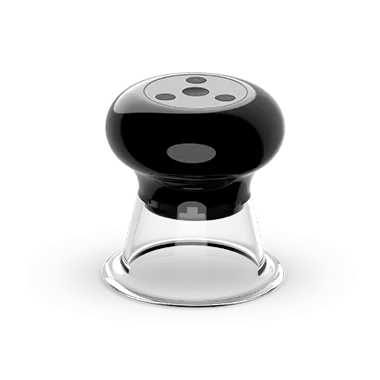
Modern devices such as the massage gun category are designed with multiple speed levels and interchangeable massage heads, allowing users to customize the experience according to different muscle groups and recovery needs.
For example, a softer attachment may be suitable for sensitive areas, while a firmer head may provide deeper stimulation for larger muscle groups. This flexibility makes massage guns increasingly popular among home fitness users who want professional-style recovery convenience without visiting a massage therapist regularly.
Massage guns can be an effective recovery tool when used correctly, but more intensity does not always mean better results. The goal should be comfortable muscle stimulation rather than applying excessive force.
Research on percussion therapy suggests that massage devices may temporarily improve flexibility, range of motion, and perceived muscle comfort. However, they should be combined with proper training, hydration, sleep, and recovery planning.
The effectiveness of a massage gun also depends on product design. Important factors include motor performance, stroke length, battery life, noise level, and attachment selection.
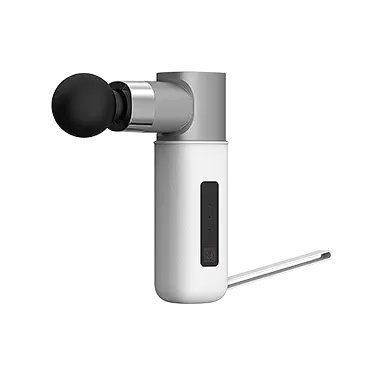
For users comparing different product options, models such as Massage Gun HH8521G demonstrate how professional massage devices can combine multiple intensity settings with ergonomic design for different application scenarios.
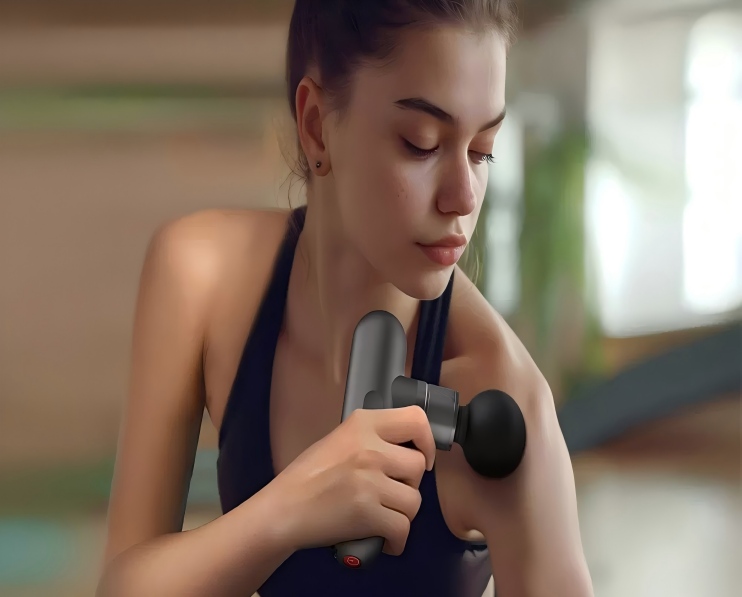
A foam roller remains a valuable recovery tool because it covers large muscle areas efficiently. It is commonly used before or after workouts to support mobility routines, especially for athletes who perform repetitive lower-body movements.
Cyclists, runners, and strength-training users often use foam rollers on the legs because they can quickly apply pressure across the entire muscle group. This makes foam rolling practical for warm-up preparation and general flexibility routines.
However, foam rolling requires more body movement and space. For people living in apartments, working in offices, or looking for a quick recovery solution after exercise, a compact massage gun may provide greater convenience.
Yes. Many fitness professionals use both tools because they serve different purposes.
A foam roller can be used first to work across larger muscle groups and improve mobility. After identifying specific areas of tension, a massage gun can provide more targeted stimulation.
This combination approach allows users to benefit from broad muscle coverage while maintaining precise control over sensitive or tired areas.
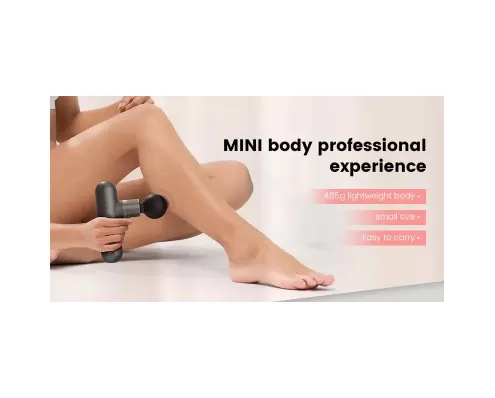
For users who prefer lightweight and portable recovery equipment, products such as Massage Gun HH8509 provide an alternative solution for daily relaxation, travel, and home workouts.
Choosing between a massage gun and foam roller depends on several practical factors:
If you need targeted muscle relaxation, choose a massage gun.
If you want full-body mobility work, choose a foam roller.
If you have limited space, a portable massage gun may be more convenient.
If you prefer simple equipment without batteries or charging, a foam roller remains reliable.
If different users will share the equipment, adjustable intensity is an important consideration.
Neither tool is universally better. Massage guns are better for targeted areas and convenience, while foam rollers are better for large muscle groups and mobility exercises.
No. A massage gun can support muscle relaxation, but it does not replace stretching, mobility training, or a proper warm-up routine.
Most users benefit from short sessions focused on specific muscle groups. Excessive use or high pressure is unnecessary and may cause discomfort.
Beginners often find massage guns easier because intensity can be adjusted gradually. Foam rollers are also effective but require more control of body weight and positioning.
Massage guns and foam rollers are both valuable recovery tools, but they solve different problems. Foam rollers provide broad muscle compression and mobility support, while massage guns offer targeted, convenient percussion therapy.
For modern fitness users who want flexible recovery at home, a massage gun provides excellent convenience and customization. However, combining both tools can create a more complete recovery routine by balancing general mobility work with precise muscle care.
PREV