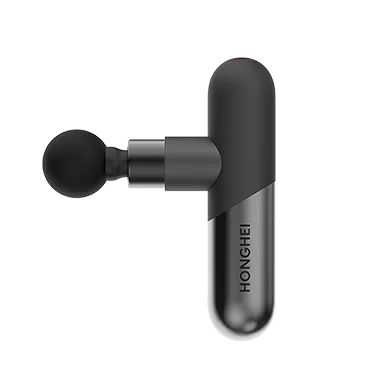
HH8821

Designing a massage gun is fundamentally a trade-off exercise. Increasing motor output can improve mechanical performance, but it may also increase weight, noise, heat generation, and battery consumption. A longer stroke can provide deeper mechanical movement, yet excessive amplitude may make a device uncomfortable or unnecessarily demanding for some users. The most successful designs therefore do not simply maximize one specification. They balance output, stroke characteristics, ergonomics, energy efficiency, acoustic performance, and portability as an integrated system.
Motor performance should be considered together with the load applied during use. A device that performs well without resistance may behave differently when pressure is applied to the body.
For product development, engineers should evaluate stall resistance, output consistency, speed stability, heat generation, and operating efficiency. Peak motor power alone does not necessarily indicate a better user experience.
A well-designed system maintains useful mechanical output without making the housing excessively large. This is particularly important for portable devices where every additional component affects the final weight and balance.
Stroke length determines how far the massage head moves during each cycle and therefore influences the mechanical sensation delivered to the user. Different applications may require different amplitude characteristics.
For example, a compact device intended for general portability may prioritize a moderate stroke and lightweight construction, while a professional-oriented model may use a longer stroke to support a more pronounced mechanical effect.
When comparing specifications, buyers should therefore avoid treating stroke length as an isolated “higher is better” measurement. A massage gun stroke length should be considered alongside motor output, speed settings, head design, housing geometry, and intended application.
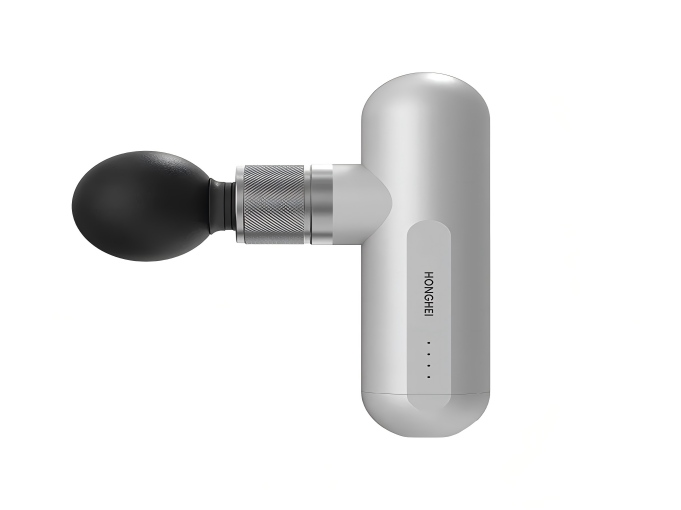
Two massage guns with identical weights can feel completely different in the hand. The position of the motor, battery, control board, and grip determines the center of gravity and affects wrist and forearm loading.
A device with a poorly balanced structure may feel heavy even when its total weight appears reasonable. Conversely, a carefully engineered housing can make a slightly heavier product easier to control.
For portable massage equipment, designers should therefore evaluate:
Center of gravity
Grip diameter
Grip surface and material
Control-button location
One-handed operation
Vibration transferred to the user's hand
Miniaturization requires careful integration of internal components. Reducing housing dimensions without reconsidering motor placement, battery capacity, heat dissipation, and structural strength can create engineering compromises.
An aluminum unibody structure, for example, can provide a rigid housing while supporting a slim external profile. However, material selection should be evaluated together with thermal behavior, manufacturing cost, weight, and surface treatment.
The objective is not simply to make the massage gun smaller. It is to achieve an efficient internal architecture that allows the device to remain comfortable and durable without sacrificing useful mechanical performance.
Battery capacity directly influences portability and operating time, but a larger battery also adds mass and occupies internal space. Engineers therefore need to balance energy requirements with the expected usage pattern.
A professional device used repeatedly throughout the day may require longer operating endurance. A compact consumer-oriented product may instead prioritize low weight and convenient charging.
Battery performance should also be assessed in relation to motor efficiency and operating modes. A more efficient motor-control system can sometimes provide useful runtime without simply increasing battery size.
Continuous motor operation produces heat. If heat is not managed effectively, it can affect user comfort, component life, battery performance, and long-term reliability.
Thermal management can involve housing material, internal airflow, component arrangement, control algorithms, and operating limits. Engineers should consider the complete thermal path rather than adding cooling components after the core structure has already been finalized.
This is particularly relevant to professional applications where the device may be used repeatedly with limited cooling intervals.
Yes. Mechanical output is only one part of perceived product quality. Excessive motor or gear noise can make a massage gun less comfortable to use, particularly in clinics, fitness studios, wellness centers, or shared environments.
Noise optimization may require attention to motor selection, gear tolerances, housing structure, vibration isolation, and assembly precision. The objective is not necessarily silent operation, but a sound profile that remains acceptable during normal use.
Different markets may require different combinations of performance and portability. Some buyers may prioritize a lightweight design, while others may focus on longer stroke characteristics, battery endurance, heat or cold functions, or premium housing materials.
A capable massage gun manufacturer should therefore be able to discuss more than branding and packaging. Customization may involve intensity, stroke length, speed levels, battery configuration, accessories, control logic, external housing, and packaging.
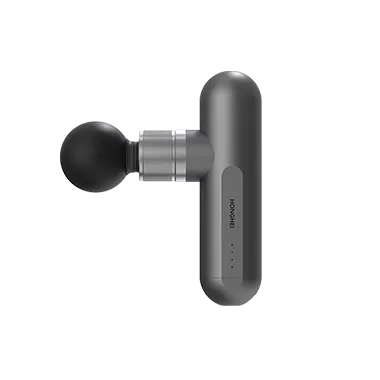
Lightweight models demonstrate why product development should be application-specific. A compact massage gun such as HH8503 can be positioned around portability and ease of handling rather than simply competing with larger devices on maximum mechanical output.
This type of product can be particularly relevant when the user needs to carry the device regularly or operate it for shorter sessions. Its value comes from the balance between physical size, usability, and functional performance.
| Design Priority | Potential Advantage | Potential Trade-Off |
|---|---|---|
| Higher motor output | Greater mechanical capability | Weight, heat, battery consumption |
| Longer stroke | More pronounced mechanical movement | Size and comfort considerations |
| Larger battery | Longer runtime | Higher weight and volume |
| Smaller housing | Better portability | Less internal space |
| Heavier construction | Potential structural rigidity | Reduced portability |
Buyers should evaluate the complete system rather than selecting a massage gun from one headline specification. Motor consistency, stroke characteristics, weight distribution, battery endurance, thermal behavior, noise, grip ergonomics, materials, and speed control all influence practical performance.
The strongest designs are those in which these characteristics support one another. A portable massage gun does not need maximum output if doing so makes the device uncomfortable to carry or operate. Likewise, a high-powered model loses practical value if heat, noise, or poor balance limits its usability.
For manufacturers and buyers alike, the central design question is therefore not how to maximize performance, but how to deliver the required performance within a package that users can comfortably control, carry, and operate over time.